

NovelSpark - Read Good Stories
NovelSpark
I approached NovelSpark as a reading app rather than expecting it to behave like a full digital library, social network, or writing tool. That distinction matters. It sits in the Books & Reference category, comes from NovelSpark, and is aimed at readers who want an easy way to spend time with stories on a phone. Its free entry point makes it simple to try, although optional purchases range from under a dollar to well over a hundred dollars per item, so I would still pay attention to what appears on screen before confirming anything.
My overall impression is positive but practical: the app is most appealing when you already know you want a story-focused reading experience and are comfortable exploring at your own pace. It has an average rating of 4.2 from around seventy ratings, with fewer than twenty written reviews, and its reach is still modest at over ten thousand installs. That makes it feel more like a developing reading destination than an established replacement for every book service you already use.
Getting past the first points of friction
Why the first few minutes matter
The beginning of any reading app can be more important than its catalogue. If I open something intending to read during a short break, I do not want to spend that entire break figuring out where a story starts, how to return to it, or whether a button will open a purchase screen. With NovelSpark, I would treat the first session as a short orientation rather than immediately committing to a long reading session.
I would first look for the basic path: browse a story, open its reading view, move through the text, and return to the place I was reading. Those checks sound obvious, but they answer the questions that affect everyday use. Can I recognize what I have already opened? Is the reading screen comfortable in the lighting where I normally use my phone? Does going back return me to the list or to the passage itself? A few minutes spent answering those questions can prevent frustration later.
The app is free to install, which lowers the risk of trying it. However, free access and optional purchases are not the same thing. The listed purchase range runs from $0.99 to $119.99 per item, a wide spread that deserves careful attention. I would avoid tapping quickly through unfamiliar prompts, especially when browsing late at night or while multitasking. If you are setting it up for a younger family member, the mature 17+ content rating is an important reason not to treat it as a general children’s reading app.
Related News

Why WhatsApp Messenger Still Makes Everyday Communication Feel Easy

Jurassic World: The Game Is the Better Dino Tycoon for Strategic Players

Threads in Real Life: Who Should Join, Lurk, or Leave

How SHEIN Turned Shopping Into an Endless Content Feed

How to Make Fortnite Feel Smarter on Mobile

Should You Switch to Microsoft Outlook on Mobile?
Simple checks before blaming the app
When a reading app seems stuck, I start with the phone rather than assuming the application is broken. I check whether other apps can connect normally, make sure the device has enough free storage for ordinary operation, and confirm that the operating system is supported. NovelSpark requires Android 7.0 or later, so an older Android phone may be the real obstacle even if the app appears in a search result.
I also close demanding apps before trying again. A phone that is low on memory can make a lightweight reading task feel unreliable, particularly when switching between a story and another application. Restarting the phone is not an exciting solution, but it often clears temporary system trouble more effectively than repeatedly tapping the same control.
For a new installation, I prefer a stable connection for the first launch. If a page takes a long time to appear, I try a different network before repeatedly reopening the app. That small comparison helps separate a connection problem from an app problem. I would also install the current version, 1.1.0, rather than relying on an old copy that may behave differently from the version the developer currently supports.
Gallery
How I would set up a dependable reading routine
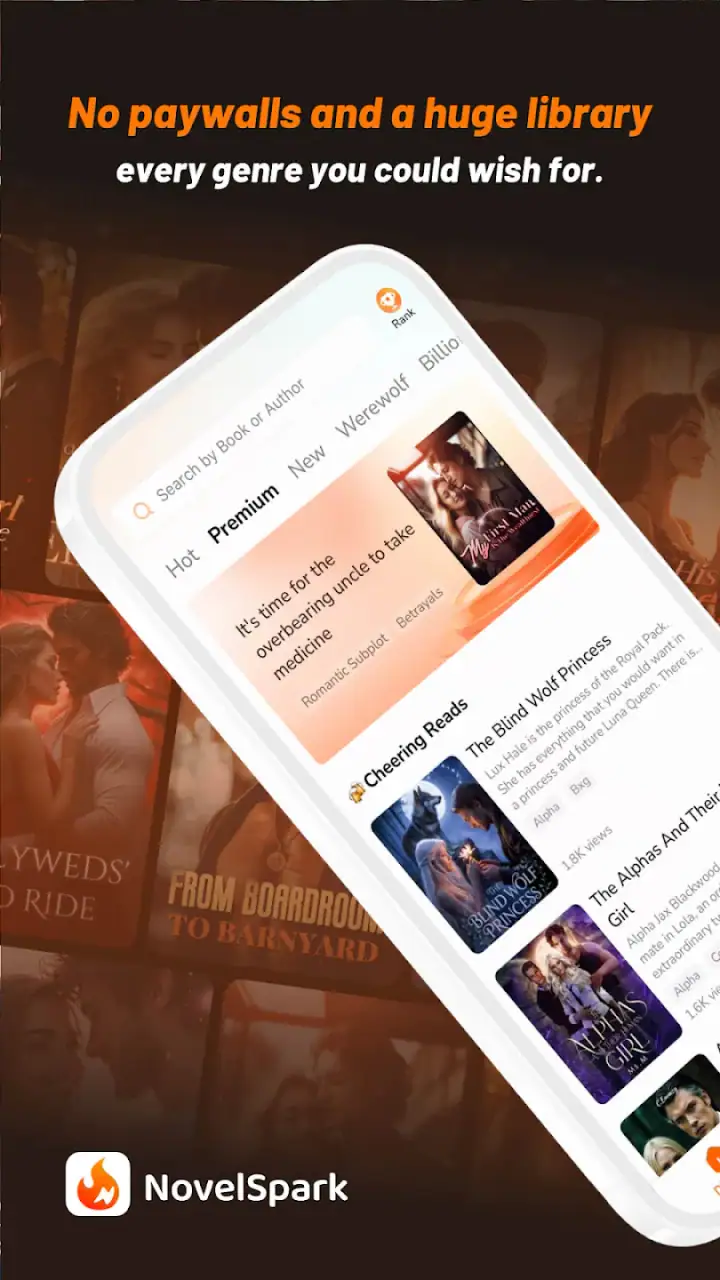
I would not begin by opening several stories at once. Instead, I would choose one, read far enough to decide whether the writing and presentation suit me, and then leave the app normally. On the next visit, I would check whether it is easy to find that same story again. This is a useful test because a reading app can look attractive during browsing but become inconvenient if returning readers must search from the beginning each time.
For short daily sessions, I would use a consistent routine: open the app, return to the story I was exploring, read for a few minutes, and exit through the normal navigation. If the app offers a visible way to keep track of reading, I would use that rather than depending on memory. If I cannot tell where I stopped, I would make a temporary note outside the app until I understand how its reading flow works. That is less elegant, but it protects a commute or lunch-break reading habit from unnecessary repetition.
Another useful setup check is to review purchase prompts before settling in. I would identify which actions are ordinary browsing and which might lead toward paid content. This is especially relevant because the available purchase amounts vary considerably. A reader who only wants free reading should make that boundary clear to themselves from the start instead of discovering it after becoming invested in a story.
Recovering when a story or screen does not behave normally
If a story page fails to load, I would first leave that screen and reopen it once. If the problem remains, I would switch networks, force-close the app, and launch it again. I would avoid repeatedly pressing a purchase or navigation button, because rapid repeated taps can make it harder to tell what the app has actually registered.
If the app opens but my reading position seems wrong, I would check whether I accidentally opened a different story or a different entry point to the same story. I would also note whether the problem happens every time or only after switching between apps. That distinction is useful when deciding what to do next. A repeatable issue inside one story points toward that content or screen; a problem that appears across the whole app suggests a broader installation, connection, or device issue.
When ordinary restarting does not help, I would use the phone’s standard app-management tools carefully. Clearing temporary cache can be a reasonable next step, but I would not clear stored app data casually because that can remove local information or force a fresh setup. Before taking any destructive step, I would make sure I know how I will find my reading again. The safest recovery method is the least disruptive one that solves the immediate problem.
I would also avoid uninstalling immediately. Reinstalling can help with a damaged installation, but it can also remove locally retained progress or settings. If you do reach that stage, record the story you were reading and any account details you normally use before removing the app. This is a practical habit for any reading service, and it is particularly sensible with a relatively new version and a smaller user base, where your exact problem may not have an obvious community workaround.
When the phone, network, or expectations are the real issue
Not every disappointing session is caused by NovelSpark. A weak mobile signal can make a story appear unavailable. An older phone can struggle with app switching even when the text itself is simple. Aggressive battery-saving settings may interrupt background behavior, while nearly full storage can cause unrelated apps to act unpredictably. I would test the same phone with another ordinary application before deciding that this reader is at fault.
There is also a difference between a missing convenience and a malfunction. Someone coming from a mature ebook platform may expect extensive sorting, advanced typography, broad export options, or a large personal library. If those habits are central to how you read, the issue may be a mismatch rather than a technical failure. NovelSpark is better judged on whether its story experience is pleasant and easy enough for your needs, not on whether it duplicates every tool found in a much older reading ecosystem.
The mature 17+ rating is another expectation-setting issue. I would not install it for a child simply because the app belongs to a book-related category. Parents should choose a service whose audience and controls match the child’s age, while adult readers should still decide whether the available material suits their personal preferences. A book label alone does not tell you that an app is appropriate for every reader.
Where it fits beside familiar reading alternatives
Compared with a general ebook reader, NovelSpark feels more focused on discovering and spending time with stories inside its own experience. That can be appealing if you want something direct and do not want to organize a large collection of files. A dedicated ebook app is usually the better choice when you already own books in particular formats, depend on detailed reading controls, or need a carefully managed personal library.
Compared with a web browser, the app has the advantage of giving the reading experience its own space. I find that separation useful when I want to read without mixing the session with unrelated tabs and notifications. The browser remains more flexible for people who move between many story websites, research sources, and reference pages. If your reading habit depends on copying information, comparing several sites, or keeping everything in one browser workflow, a standalone app may feel restrictive.
Compared with a subscription library, NovelSpark may suit readers who prefer sampling individual story experiences rather than paying for broad access. The trade-off is that the purchase structure needs attention. The low starting price can make a small commitment feel harmless, but the upper end of the listed range is substantial. I would choose it over a subscription only when the way I read matches the app’s specific offering and I am comfortable evaluating purchases one at a time.
Three useful habits that improve the experience
My first tip is to test the return path before you become deeply involved in a story. Open a title, read a little, leave the app, and come back later. This reveals whether the app supports your real schedule better than a long uninterrupted test does. A reading service that works during a two-minute pause is more valuable to me than one that only feels good during a carefully planned session.
My second tip is to separate discovery from commitment. Browse several possibilities if you like, but do not make multiple purchases simply because the first screen is engaging. Since the purchase range is broad, I would treat every paid action as a deliberate decision. This approach also makes it easier to judge whether the free experience alone is enough for you.
My third tip is to keep a small troubleshooting record when something goes wrong. Note the screen, the network you were using, whether you had switched apps, and whether reopening fixed it. That information helps you recognize patterns instead of repeating random fixes. It also gives you a clearer explanation if you decide to contact NovelSpark, because “it stopped working” is much less useful than describing the exact point where the reading flow failed.
A fourth habit is to evaluate comfort at the time you actually read. A layout that looks fine in daylight may not suit a dark bedroom or a crowded commute. I would check text clarity, scrolling or page movement, and how easy it is to pause without losing my place. These are not flashy features, but they determine whether an app becomes part of my routine or gets forgotten after one download.
Who should try it, and who should pass
I would recommend giving NovelSpark a try if you enjoy exploring stories on your phone, want a free starting point, and do not need a large collection-management system. It is also a reasonable option for readers who prefer a dedicated story environment instead of reading through a browser. The developer is NovelSpark, and the app’s still-growing install base suggests that early users should approach it with realistic expectations rather than assuming the depth of a long-established platform.
I would be more cautious if you need guaranteed continuity across several devices, advanced accessibility controls, extensive offline organization, or a very large catalogue. Those needs can make a traditional ebook service or a more established reading platform a better fit. I would also skip it for children because of the mature 17+ rating, and I would avoid it if you strongly dislike in-app purchase prompts or do not want to monitor spending.
The release date, Nov 6, 2025, also gives the app a relatively fresh profile. That can be a benefit if you like trying newer products and are comfortable with a developing experience. It can be a drawback if you expect every edge case to have a polished solution already. I would judge it after several ordinary sessions, not after one unusually smooth or unusually frustrating launch.
My practical verdict
NovelSpark is worth trying for adult readers who want a straightforward, story-centered app and are willing to spend a little time learning its rhythm. I like the low barrier to entry and the possibility of making it part of a short daily reading routine. The strongest case for it is not that it replaces every alternative, but that it can offer a focused way to discover and read stories without requiring a large setup.
My reservation is the same one I would share with a friend: keep your expectations and spending controlled. Check compatibility, use the latest version, test the return-to-reading flow, and troubleshoot the connection before assuming the app has failed. Pay attention to purchase prompts, and remember that mature content makes it unsuitable for younger readers. The best reason to install NovelSpark is a specific interest in its story experience, not the hope that it will automatically become your complete digital library.
With that mindset, the free download is an easy experiment. If its reading flow feels natural on your phone and the available stories match your taste, it can earn a place in your regular rotation. If you need deep library tools, broad format support, or a highly established ecosystem, another reading option will probably serve you better. For me, it is a promising, focused app that deserves a fair trial, provided I treat its newer, purchase-supported setup as part of the decision rather than overlooking it.
FAQs for NovelSpark - Read Good Stories
What is NovelSpark - Read Good Stories?
NovelSpark - Read Good Stories is a mobile reading app designed for people who enjoy discovering and reading serialized fiction. It typically brings together stories from different genres, such as romance, fantasy, mystery, drama, and adventure, in a convenient catalog. Readers can browse titles, open chapters, and follow stories from their Android or iOS device without needing a physical book.
Is NovelSpark - Read Good Stories free to download and use?
The app can generally be downloaded at no initial cost, but free access may not include every story, chapter, or feature. Some content may be supported by advertisements, while other chapters or reading benefits can require in-app purchases, credits, or a subscription. Before downloading, users should check the current store listing and review the payment terms to understand possible costs.
Does NovelSpark require an internet connection to read stories?
An internet connection is usually needed to browse the catalog, load new chapters, synchronize reading progress, and access account-related features. Depending on the version of the app, selected chapters may be available for offline reading after being downloaded. Offline availability can vary by title and device, so readers should not assume that the entire library can be used without mobile data or Wi-Fi.
What types of stories are available on NovelSpark?
NovelSpark focuses on digital fiction and may offer a broad selection of genres, including romance, fantasy, contemporary drama, mystery, thriller, and supernatural stories. The exact catalog can change as new titles are added or removed. Readers should use the categories, search tools, and descriptions to find suitable books, while also checking content warnings because themes and maturity levels may differ between stories.
Is NovelSpark - Read Good Stories suitable for children?
The app may contain stories written for different audiences, and not every title will be appropriate for children. Some books can include mature romance, violence, strong language, or emotionally intense subjects. Parents and guardians should review the app’s age rating, privacy information, and individual story descriptions before allowing a child to use it. Device-level parental controls may also help manage purchases and access.
Pros
- Clean
- distraction-free reading interface
- Wide selection of genres for different tastes
- Easy bookmarking helps track unfinished stories
- Adjustable text size improves reading comfort
- Regularly updated library provides fresh content
Cons
- Some stories may vary noticeably in writing quality
- Popular titles can be limited by regional availability
- Offline reading may require extra setup or access
- Ads can interrupt browsing for free users
- Advanced discovery filters may feel limited


